

Full-Stack AI Orchestration: Modular Agents, Observability, and the Edge

Bookmark
Rate this content

Enterprise AI is an orchestration problem. We need systems that are modular, observable, and scalable – from our central data centers to the edge. This session is an architectural tour of how LangGraph.js provides the “glue” to connect these modern enterprise patterns in a TypeScript/Node.js environment.

We’ll start by framing the AI agent as a “Modular Monolith”—a single, deployable service built from testable, graph-based components. This explicit graph structure isn’t just for logic; it makes Observability a First-Class Citizen, allowing us to trace the agent’s cyclical reasoning in production.

Next, we’ll deploy this agent as an intelligent Backend-for-Frontend (BFF), empowering our full-stack applications with stateful orchestration. Finally, we’ll tackle the next frontier: Architecting for the Edge. We will explore patterns for managing persistent agent state in a hybrid environment, allowing our AI to run anywhere.

This talk is for the architect and engineer who needs to build and scale real-world, enterprise-grade AI applications.

This talk has been presented at JSNation US 2025, check out the latest edition of this JavaScript Conference.


FAQ

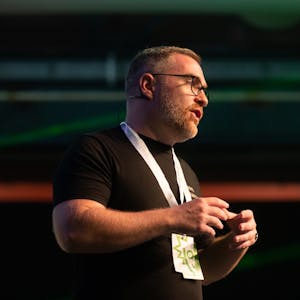
Jamal O'Garro is an engineer at Netflix, currently working in the data platform organization on the experimentation platform team. He has experience in infrastructure engineering, platform engineering, data science and engineering, and finance, particularly in algorithmic and systematic trading strategies.

The focus of Jamal O'Garro's talk is on artificial intelligence, particularly in how JavaScript engineers can embed AI experience for users. He discusses the broad field of AI, machine learning, deep learning, and agentic AI systems.

Agentic AI systems are software powered by AI or agents that have reasoning capabilities, allowing them to interpret natural language, make decisions, interact with APIs, query databases, and engage in dynamic conversations. These systems differ from traditional AI by having non-linear workflows and the ability to plan and reason.

Jamal O'Garro recommends using LangRaph for graph modeling of agents, LangSmith for observability and traceability, and Temporal for durable workflow orchestration to build robust AI systems that can handle failures and scale efficiently.

LangRaph is a tool that allows you to define agents as graphs, enabling conditional routing and reuse of nodes for different agents. It supports complex control flows with cycles, making it easier to build flexible and dynamic agentic systems.

LangSmith provides full observability and traceability into the actions of AI systems. It allows you to see every call made by agents, track token usage and costs, and evaluate performance through detailed logs and analysis.

Temporal contributes to AI system reliability by providing durable workflows that ensure fault tolerance. It keeps a history of transactions, allowing workflows to restart and resume from failure points, thereby maintaining system stability and reducing downtime.

Jamal O'Garro emphasizes that JavaScript can be effectively used for AI development. He highlights that tools are available in JavaScript and Node.js, allowing developers to build sophisticated AI systems without needing to switch to Python.

Jamal O'Garro is passionate about hip hop, sneakers, and sports. He is a fan of the New York Yankees, Giants, Rangers, and a die-hard Knicks fan.

The main challenges in building agentic AI systems include managing unpredictability, ensuring resilience against failures, handling distributed systems orchestration problems, and dealing with the potential hallucinations of AI models.

Jamal Sinclair O'Garro
32 min
17 Nov, 2025

Comments

Sign in or register to post your comment.
Video Summary and Transcription
The Talk delves into artificial intelligence, deep learning, and agentic systems, emphasizing the challenges and importance of building trustworthy AI systems. It proposes a modern enterprise stack for resilient and scalable AI systems, discussing the use of modular architecture, agent logic, and observability tools. The session explores the benefits of iterative agent logic, scalability enhancements, and efficient model management. Additionally, it showcases practical applications in sports statistics verification and playoff probability estimation while highlighting the significance of system performance, efficiency optimization, and robustness in large-scale operations.

1. Introduction to Artificial Intelligence

Short description:

Welcome to New York! I'm Jamal O'Garro, an engineer at Netflix. Let's talk about artificial intelligence and its relevance to JavaScript engineers. AI systems are software that reason and perform actions. Artificial intelligence encompasses machine learning as a subset.

So welcome to New York, if you folks are here from New York. So let's start with the talk. Thanks for coming to join. So my name is Jamal O'Garro. I am an engineer at Netflix, currently in the data platform organization, working on the experimentation platform team. So any A-B testing experimentation that you may be randomly assigned to, I am the team who basically makes that happen. I've been on a few teams at Netflix. I've been in infrastructure engineering, platform engineering, data science and engineering, and now I'm in the data platform. I've been there for about a little under four years or so, so got to see a good bit of the company. Before I joined, I basically spent my entire career working in finance, primarily building algorithmic trading and systematic trading strategies and software. Not too far from here in JC. So more personal about me, I'm a hip hop head, I'm a sneaker head, I'm a Yankees fan, Giants, Rangers, and die-hard true blue, true-blooded Knicks fan. Let's go, Knicks. First photo is me on the top of the Netflix office in Los Angeles. The second is me on top of a volcano in Hawaii, repping the Knicks. So it gets real.

Alright. So let's go ahead and set the stage for this talk. Mainly we're going to we're here to talk about artificial intelligence, just like the big thing happening right now. Everything is AI, AI everywhere. And us as JavaScript engineers, we're probably in probably one of the best places to like start embedding some of this experience to the users. And I realized that my screen is actually flashing a little bit. Let's see if I can get that. So apologies. Alright. So I'm going to give a little bit of a background on like what AI is for our purposes. Here's a literal textbook definition, but not here to read textbook definitions. We're going to say for our purposes, an AI system is basically just a software that knows how to reason about and perform some type of action within a system. And if we take a step back and see like what are the main areas of artificial intelligence? We see that it's a pretty broad field, right, that contains machine learning as a subset.

2. Exploring Deep Learning and Agents

Short description:

We delve into deep learning with artificial neural networks and the transformer architecture. Google's Attention is All You Need paper led to large language models like Chachi, BTE. Agents, intelligent software, interpret language, interact with APIs, databases, use large language models, and have shared states like memory and tools for specific tasks.

That contains machine learning as a subset. We're basically trying to take data and like have our programs learn from that data. And if we go a little bit deeper, we're going to focus here on our talk is deep learning, where you have this very nice construct that you may have heard or seen, called the artificial neural network, which looks like a tree of life if you flip it one way, depending what kind of stuff you're into outside of outside of work. Or is basically just a simple algorithm that basically takes inputs and does a really good job of like training these things here, called these hidden layers, to try to find optimal ways to approximate some type of function. That is really good for either predicting data, classifying, classifying some type of data or target. And over the years, there was a change to that architecture called the transformer.

I think some folks in Google released a paper called Attention is All You Need, where they added some like pretty interesting and nifty tricks to the architecture to basically create this type of structure that's really good at performing like sequential predictions and analysis, basically. And it turned out that it was actually really good at predicting large sequences of text from a very large corpus. And what that did was gave us gave birth to all these cool large language models like Chachi, BTE, Grok, DeepC, Claude, Gemini, that we're all probably using today and trying to figure out how we can embed them within our production systems. I think the funny story here is that Google released the paper, but OpenAI implemented it first. And they had the first move advantage to get Chachi, BTE out there and open up the floodgates. So we look back at the LLM spectrum, where does it where do they sit? It basically sits right here as a subset of deep learning, right?

Now let's talk a little bit more about agents, which we're going to focus on today. And basically for our purposes, an agent is just simply a intelligent piece of software that knows how to interpret natural language. It can make decisions. It can do things like interact with API, query a database, get context from a user, have like a full fledged, like live conversation, like you probably see within Chachi, BTE. Typically, like they're built using other large language models. They can also be built from other agents. So we're going to be talking about that today. Like how do you build an agent of agents that can be composed of many different large language models that can perform the best, that is the best tool for the job. Some of the main capabilities that you get are the ability to call tools. So tools are like simple, like special skills that you can give to an agent or large language model. So think about calling an API, querying a database, right? Just knows how to do that and do it well. You can define it as a function.

QnA

Check out more articles and videos

We constantly think of articles and videos that might spark Git people interest / skill us up or help building a stellar career

Full Stack Components
Remix Conf Europe 2022Remix Conf Europe 2022
37 min
Full Stack Components
Top Content
RemixConf EU discussed full stack components and their benefits, such as marrying the backend and UI in the same file. The talk demonstrated the implementation of a combo box with search functionality using Remix and the Downshift library. It also highlighted the ease of creating resource routes in Remix and the importance of code organization and maintainability in full stack components. The speaker expressed gratitude towards the audience and discussed the future of Remix, including its acquisition by Shopify and the potential for collaboration with Hydrogen.
RedwoodJS: The Full-Stack React App Framework of Your Dreams
React Summit Remote Edition 2021React Summit Remote Edition 2021
43 min
RedwoodJS: The Full-Stack React App Framework of Your Dreams
Top Content
Redwood JS is a full stack React app framework that simplifies development and testing. It uses a directory structure to organize code and provides easy data fetching with cells. Redwood eliminates boilerplate and integrates Jest and Storybook. It supports pre-rendering and provides solutions for authentication and deployment. Redwood is a cross-client framework that allows for building web and mobile applications without duplicating work.
Remix Architecture Patterns
Remix Conf Europe 2022Remix Conf Europe 2022
23 min
Remix Architecture Patterns
Top Content
This Talk introduces the Remix architecture patterns for web applications, with over 50% of participants using Remix professionally. The migration from single page applications to Remix involves step-by-step refactoring and offers flexibility in deployment options. Scalability can be achieved by distributing the database layer and implementing application caching. The backend for frontend pattern simplifies data fetching, and Remix provides real-time capabilities for collaborative features through WebSocket servers and Server-SendEvents.
Thinking Like an Architect
React Summit 2025React Summit 2025
32 min
Thinking Like an Architect
Top ContentPremium
Modern software development shift towards developers involves more complex architecture decisions with trade-offs and long-term consequences. 11 tips learned from diverse projects and roles. Focus on decentralization, avoid technology-first approach, and consider context for great architecture. Understanding the holistic approach to architecture. Linking architecture to culture and structure. Importance of aligning decisions with business needs using techniques like event storming and domain storytelling. Netflix's core domain focuses on content accessibility and tailored user experience. Supporting domains like personalization ensure usability even during downtime. Payment methods, a generic domain, are essential for subscription. Adapting boundaries and architectural characteristics is crucial for evolving businesses. Define evolving core domains and adapt characteristics accordingly. Select key architectural characteristics for system design. Consider different availability needs for various subdomains like core and generic. Latency varies based on functions; strict for finance, flexible for integration. Understand and apply specific characteristics to subdomains for optimal system performance. Understand the need for different approaches in system design. Consider availability requirements for active architecture. Evaluate decisions impacting software design and technology. Modularize workload at code or code-infrastructure level. Consider context in choosing between monoliths and microservices. Adapt system modularity based on context and team structure. Consider modularity based on system requirements. Be pragmatic in architectural decisions. Utilize event-driven architecture in distributed systems. Leverage infrastructure for efficient service stitching and delivery. Adapt to changing system characteristics for scalability and efficiency. Consider cost implications of shifting from event-based to cron job. Design software for evolution, embracing changes and tradeoffs for user-focused systems. Create a sociotechnical system balancing long-term vision and immediate needs with a lean mindset. Embrace an iterative approach to software development, understanding the domain, consumers, and the system. Master communication skills for architects by focusing on communication, inclusion, and documentation. Translate technology reasons into business benefits to effectively communicate with various stakeholders. Change language to match audience, share reasoning effectively. Involve others in decision-making for better understanding and solutions. Master architectural decision records and architecture as code. Utilize written communication for API changes, involve all voices. Sequence diagrams aid team understanding; master architecture as code. Focus on key aspects, prioritize effectively to avoid distractions.
Full-stack JS today: Fastify, GraphQL and React
React Summit 2022React Summit 2022
25 min
Full-stack JS today: Fastify, GraphQL and React
The Talk discusses building a modern full stack application with JavaScript and GraphQL, emphasizing the importance of prioritizing the critical 20% of challenges. It highlights the benefits of building a productive and transparent tech stack with modularity and developer-friendly tools. The use of PostGrey as a relational database and Fastify as a server framework is recommended. The Talk also explores the advantages of using Mercurius and Urql for GraphQL implementation. Additionally, it mentions the use of React, SSR, and Fastify Vite for full-stack SSR and modular components. The Talk concludes by mentioning the advantages of this stack for complex functionality and the possibility of using Fastify in a serverless infrastructure.
Remixing Your Stack in a Monorepo Workspace
Remix Conf Europe 2022Remix Conf Europe 2022
22 min
Remixing Your Stack in a Monorepo Workspace
Let's talk about remixing our stack in a Monorepo workspace, which allows for incremental migration and is suitable for transitioning from a Next.js app to a remix stack. Refactoring may be required for feature-specific and Next.js-coupled components, but the process is simplified because the features have already been moved out. Configuring the Monorepo to reference packages locally and linking them to the Next.js application is necessary. Nx provides benefits like fast refreshing, pre-configured setups, and features like local and remote caching.

Workshops on related topic

Free webinar: Building Full Stack Apps With Cursor
Productivity Conf for Devs and Tech LeadersProductivity Conf for Devs and Tech Leaders
71 min
Free webinar: Building Full Stack Apps With Cursor
Top Content
WorkshopFree
Mike Mikula
Mike Mikula
In this webinar I’ll cover a repeatable process on how to spin up full stack apps in Cursor.  Expect to understand techniques such as using GPT to create product requirements, database schemas, roadmaps and using those in notes to generate checklists to guide app development.  We will dive further in on how to fix hallucinations/ errors that occur, useful prompts to make your app look and feel modern, approaches to get every layer wired up and more!  By the end expect to be able to run your own ai generated full stack app on your machine!
Developing Dynamic Blogs with SvelteKit & Storyblok: A Hands-on Workshop
JSNation 2023JSNation 2023
174 min
Developing Dynamic Blogs with SvelteKit & Storyblok: A Hands-on Workshop
Top Content
WorkshopFree
Alba Silvente Fuentes
Roberto Butti
2 authors
This SvelteKit workshop explores the integration of 3rd party services, such as Storyblok, in a SvelteKit project. Participants will learn how to create a SvelteKit project, leverage Svelte components, and connect to external APIs. The workshop covers important concepts including SSR, CSR, static site generation, and deploying the application using adapters. By the end of the workshop, attendees will have a solid understanding of building SvelteKit applications with API integrations and be prepared for deployment.
Full Stack GraphQL In The Cloud With Neo4j Aura, Next.js, & Vercel
GraphQL Galaxy 2021GraphQL Galaxy 2021
161 min
Full Stack GraphQL In The Cloud With Neo4j Aura, Next.js, & Vercel
Workshop
William Lyon
William Lyon
In this workshop we will build and deploy a full stack GraphQL application using Next.js, Neo4j, and Vercel. Using a knowledge graph of news articles we will first build a GraphQL API using Next.js API routes and the Neo4j GraphQL Library. Next, we focus on the front-end, exploring how to use GraphQL for data fetching with a Next.js application. Lastly, we explore how to add personalization and content recommendation in our GraphQL API to serve relevant articles to our users, then deploy our application to the cloud using Vercel and Neo4j Aura.

Table of contents:
- Next.js overview and getting started with Next.js
- API Routes with Next.js & building a GraphQL API
- Using the Neo4j GraphQL Library
- Working with Apollo Client and GraphQL data fetching in Next.js
- Deploying with Vercel and Neo4j Aura
The Journey From React Frontend Development to Fullstack Development With Next.js
React Advanced 2024React Advanced 2024
143 min
The Journey From React Frontend Development to Fullstack Development With Next.js
Workshop
Eric Burel
Eric Burel
Join us as we journey from React frontend development to fullstack development with Next.js. During this workshop, we'll follow along the official Next.js Learn tutorial with Eric Burel, professional trainer and author of NextPatterns.dev. Together, we'll set up a Next.js website and explore its server-side features to build performant apps.
- Introduction: discovering Next.js and its server-centric philosophy- Crafting a perfectly optimized multi-page website- Making sense of Next.js server-side rendering capabilities- Conclusion: how Next.js empowers you as a React developer
Building full-stack GraphQL applications with Hasura and Vue 3
Vue.js London Live 2021Vue.js London Live 2021
115 min
Building full-stack GraphQL applications with Hasura and Vue 3
Workshop
Gavin Ray
Gavin Ray
The frontend ecosystem moves at a breakneck pace. This workshop is intended to equip participants with an understanding of the state of the Vue 3 + GraphQL ecosystem, exploring that ecosystem – hands on, and through the lens of full-stack application development.

Table of contents
- Participants will use Hasura to build out a realtime GraphQL API backed Postgres. Together we'll walk through consuming it from a frontend and making the front-end reactive, subscribed to data changes.
- Additionally, we will look at commonly-used tools in the Vue GraphQL stack (such as Apollo Client and Urql), discuss some lesser-known alternatives, and touch on problems frequently encountered when starting out.
- Multiple patterns for managing stateful data and their tradeoffs will be outlined during the workshop, and a basic implementation for each pattern discussed will be shown.
Workshop level

NOTE: No prior experience with GraphQL is necessary, but may be helpful to aid understanding. The fundamentals will be covered.