Rewriting legacy code is historically one of the most high-risk, labor-intensive bottlenecks in software engineering. But what if you could safely delegate an entire live-production migration to an AI agent?
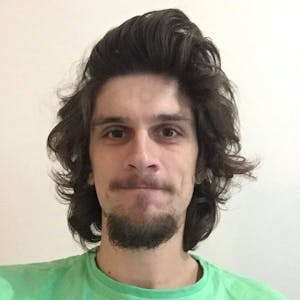
In this session, Aleksandr Nikolenko walks through a real-world case study from Perplexity: migrating a critical search pathway from an old Python service to a new, high-performance Rust implementation in under a month. By leveraging autonomous agents, the team successfully deleted roughly 50,000 lines of legacy Python code with zero user-facing regressions.
This talk breaks down the strict engineering contract that made this autonomous delegation possible. You will explore the mechanics behind building ""shadow workspaces"" where AI-generated code can fail safely, and how to implement output verification loops that test against real, live-traffic samples rather than static data. Aleksandr will also reveal how this agentic loop successfully caught schema mismatches and ranking-order divergences that traditional unit tests and human code reviews completely missed.
What You Will Learn:
- Goal-Oriented Delegation: How to turn a massive codebase rewrite into a targeted agent goal with measurable pass conditions.
- Shadow Workspaces: The architecture required to let agents execute and test refactored code safely under production load.
- Live-Traffic Verification: Why continuous output verification against real user traffic is the key to trusting AI-generated code.
This talk has been presented at AI Coding Summit NYC, check out the latest edition of this Tech Conference.