Scaling AI Adoption: The Real Challenges of Transforming 300 Engineers

This ad is not shown to multipass and full ticket holders
React Summit US
React Summit US 2026
November 17 - 20, 2026
New York, US & Online
Upcoming event
React Summit US 2026
November 17 - 20, 2026. New York, US & Online
Bookmark
Rate this content
Sentry
Promoted
Code breaks, fix it faster

Crashes, slowdowns, regressions in prod. Seer by Sentry unifies traces, replays, errors, profiles to find root causes fast.

Get started

Most companies talk about becoming "AI-native". Very few actually do it.

In this talk, I’ll share how we’re approaching the upskilling of ~300 engineers to move beyond experimentation and into real, repeatable AI-native development.

We’ll cover how we’re introducing new paradigms like AI-Native Engineering (AINE) and Spec-Driven Development, how we’re structuring the individual contributor journey, and how we’re driving adoption across teams with very different levels of maturity.

More importantly, we’ll dive into what doesn’t work: resistance patterns, false starts, over-reliance on tools, and the gap between perceived and actual productivity gains.

This talk will give you a concrete blueprint along with the trade-offs and lessons learned along the way.

This talk has been presented at TechLead Conf Amsterdam 2026: Adopting AI in Orgs Edition, check out the latest edition of this Tech Conference.

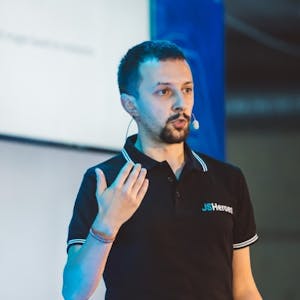
Alfonso Graziano
Alfonso Graziano
30 min
11 Jun, 2026

Comments

Sign in or register to post your comment.
Video Summary and Transcription
The talk explores scaling AI adoption in a large engineering company, emphasizing mindset shifts and upscaling. It discusses achieving AI-native team transformation through AI fluency and standardization. The importance of upskilling individuals and teams, overcoming resistance, and addressing objections to AI tools is highlighted. Transitioning to AI-native engineering focuses on intent, teamwork, and problem-solving. Emphasizing co-learning, project context, and verification in AI engineering and engaging engineers in practical AI projects are key points. Exploring AI engineering fundamentals, optimizing project iterations, and addressing project bottlenecks are also discussed.

1. Scaling AI Adoption in Large Engineering Company

Short description:

The speaker discusses scaling AI adoption in a company with over 400 engineers, sharing challenges, tips, and personal background. Exploring the transformation of teams into AI-focused, addressing common challenges in moving towards AI-native development, emphasizing the importance of mindset shifts and upscaling.

Hi, everyone. Today we will talk about how we are scaling AI adoption in a company where we have more than 300 engineers. So we'll talk about what are the real challenges, how we are doing it, what worked, what didn't work, and maybe just share a few, like, tips and tricks. So first of all, sorry, I lied. Actually, we are more around 400 engineers at the moment. So the number changed a little bit. But the principles, of course, are still pretty much the same. Just a couple of words about myself before we start. I'm Alfonso. I'm from Italy. I'm a tech lead in a company called NearForm. NearForm is basically a company selling services to highly regulated industries. We are, as I was mentioning, like more than 400 engineers while we speak. I am building AI agents. So I'm in one of our AI projects. I am supporting multiple teams adopting AI native engineering. And I'm also writing a book called Learning AI Native Software Engineering. But just I will give you a couple more informations later on.

Today we will see a little bit of a journey. So we can imagine a team on the bottom left, a team like usually a cross-functional team with software engineers, PMs, designers, every type of professional that you might need. And we will see how this team can be transformed to become an AI team. We will see some pitfalls, some issues, you know, something that they will learn along the journey. What are the techniques that we are teaching those engineers and those teams? And you know, hopefully, something that is going to be useful and reusable across your teams as well.

There is a challenge, a very common challenge that I'm seeing across multiple teams, across multiple of our clients, which is, okay, we got, we bought the copilot licenses or cloud code, whatever your team are using, but nothing really changed. I mean, yeah, we can see that something changed in terms of like velocity and like what the team is producing, but we're not sure whether it's for the price, right? So we have seen that, yes, something is happening, but we're not sure about like what's really changed once we got like the copilot licenses or whatever. And so actually what we found out is that like moving in engineering department of a lot of engineers from just experimentation with AI tools to like really AI-native development, it's way more than just tooling, right? It's going to take mindset shifts, tooling, of course, upscaling quite a lot, a lot of peer learning. So today we will answer a few questions. So we will answer why buying tools is not enough. First of all, what actually shifts when teams go really AI-native, right? When things start to work and how do you scale? How do you scale everything to an entire organization without breaking people, processes, teams, and all this good stuff? All right, first of all, let's talk about a maturity gap. So I would expect that in your organization you will have like multiple teams, and I'm almost sure that you can take every team and point them into one of those quadrants.

2. Achieving AI-native Team Transformation

Short description:

Exploring the importance of AI fluency and team standardization in achieving AI-native team transformation and the challenges of varying levels of maturity within teams.

So this is basically a very simple diagram. And as we can see, we have individually AI fluency as x-axis. So like people learning skills, implementing the right tooling, using SDD, using verification, building harnesses. And then on the y-axis, we have the team standardization, because what we noticed is that it doesn't matter too much whether an individual has AI fluency if the entire team doesn't get all these practices. Starting from the bottom left, everything is untouched, right? So the team doesn't have standardization. People don't have AI fluency. They didn't do up-skilling. So basically, everything is coding in 2022, pretty much untouched. So nothing changes.

Then, in some cases, we have seen teams where there are like possibly rules, there is team standardization, but really people didn't do up-skilling properly. So even though the rules in theory are in place, we cannot see a huge amount of benefits. On the other side, on the bottom right, we can see that there are like champions. So there are very skilled individuals, but there are like no shared rules, no team standards. So everyone is more or less doing their own thing. And so, even though from an individual level, people are smart and they're working well, there is no compounding at the team level and then at the organizational level.

What we're looking for is to move almost everyone at the top right, which is the AI native team. So we have skilled people, the right tools, the shared practices, and those are the teams that we really want to scale. Those are the teams that we are looking for. Of course, it's not just, as I was mentioning, it's not just about different teams at different levels in the maturity scale. It's also about within the same team. Within the same team, we're going to find the same gap, pretty much. So we will see, we will have someone which we call an AI team engineer, which is a person that knows how to leverage properly, the tooling, the practices and everything in an AI native way. And then we have inside the same team, we might have product manager, engineer, slidge, platform engineer.

Check out more articles and videos

We constantly think of articles and videos that might spark Git people interest / skill us up or help building a stellar career

A Framework for Managing Technical Debt
TechLead Conference 2023TechLead Conference 2023
35 min
A Framework for Managing Technical Debt
Top ContentPremium
Today's Talk discusses the importance of managing technical debt through refactoring practices, prioritization, and planning. Successful refactoring requires establishing guidelines, maintaining an inventory, and implementing a process. Celebrating success and ensuring resilience are key to building a strong refactoring culture. Visibility, support, and transparent communication are crucial for addressing technical debt effectively. The team's responsibilities, operating style, and availability should be transparent to product managers.
Principles for Scaling Frontend Application Development
React Summit 2023React Summit 2023
25 min
Principles for Scaling Frontend Application Development
Top Content
This Talk discusses scaling front-end applications through principles such as tearing down barriers, sharing code in a monorepo, and making it easy to delete code. It also emphasizes incremental migration, embracing lack of knowledge, and eliminating systematic complexity. The Talk highlights the use of automation in code migration and the importance of removing barriers to enable smoother code migration.
Fighting Technical Debt With Continuous Refactoring
React Day Berlin 2022React Day Berlin 2022
29 min
Fighting Technical Debt With Continuous Refactoring
Top Content
This Talk discusses the importance of refactoring in software development and engineering. It introduces a framework called the three pillars of refactoring: practices, inventory, and process. The Talk emphasizes the need for clear practices, understanding of technical debt, and a well-defined process for successful refactoring. It also highlights the importance of visibility, reward, and resilience in the refactoring process. The Talk concludes by discussing the role of ownership, management, and prioritization in managing technical debt and refactoring efforts.
Building High-Performing Cross-Cultural Teams
React Day Berlin 2022React Day Berlin 2022
25 min
Building High-Performing Cross-Cultural Teams
Top Content
The Talk discusses the importance of effective communication and collaboration in cross-cultural teams. It emphasizes the impact of culture on communication and performance evaluation. The speaker highlights the differences between low-context and high-context communication styles and the need to understand cultural nuances. It also explores the challenges of giving feedback in multicultural teams and suggests ways to improve communication and create a feedback culture. The influence of language on communication and the importance of transparency and honesty in feedback are also discussed.
Scale Your React App without Micro-frontends
React Summit 2022React Summit 2022
21 min
Scale Your React App without Micro-frontends
This Talk discusses scaling a React app without micro-frontend and the challenges of a growing codebase. Annex is introduced as a tool for smart rebuilds and computation caching. The importance of libraries in organizing code and promoting clean architecture is emphasized. The use of caching, NxCloud, and incremental build for optimization is explored. Updating dependencies and utilizing profiling tools are suggested for further performance improvements. Splitting the app into libraries and the benefits of a build system like NX are highlighted.
A Quick and Complete Guide to Measuring Your Tech Debt and Using the Results
TechLead Conference 2023TechLead Conference 2023
27 min
A Quick and Complete Guide to Measuring Your Tech Debt and Using the Results
This Talk discusses the measurement and interpretation of tech lead, focusing on tech debt. Tech debt is a tool to temporarily speed up development but can have negative consequences if not managed properly. Various tech debt metrics, including heuristic metrics and second-tier metrics, can help identify and manage tech debt. Tech debt interest is crucial for measuring the impact of tech debt and allows for prioritization. It is important to collect and analyze tech debt metrics to ensure software and team health.

Workshops on related topic

From Engineer to Leader: A Workshop for First-Time Tech Leaders
TechLead Conference 2024TechLead Conference 2024
144 min
From Engineer to Leader: A Workshop for First-Time Tech Leaders
Workshop
Andrew Murphy
Andrew Murphy
Transitioning from an individual contributor role to a leadership position, especially in the fast-paced tech industry, is hugely challenging. Most new leaders don't receive any training at all in the first 10 years of their new responsibilities.Our comprehensive workshop is designed to assist new and emerging tech leaders in understanding their new roles and gaining the skills to make them confident, happy and effective leaders.
The Future of Engineering Teams: Humans Guide, Agents Code
TechLead Conference 2025: AI in OrgsTechLead Conference 2025: AI in Orgs
103 min
The Future of Engineering Teams: Humans Guide, Agents Code
Workshop
Konrad Bujak
Konrad Bujak
Most teams are still using AI as a glorified autocomplete, but the future is already here. I'll show you how engineering teams work when coding agents handle implementation while humans focus on guidance and oversight.I have built coding agents that have our team guidelines embedded - no more style guides or coding standards docs. You'll see agents that automatically follow our Next.js 15 patterns, Nx monorepo structure, shadcn/ui conventions, and more of our tech stack, while humans make small corrections that improve all future work.This isn't about replacing engineers - it's about scaling the possibilities of your team through agent multiplication instead of hiring and restructurizations. I'll demonstrate the workflow where the agent implementation is followed by human refinement, creating consistent quality that doesn't depend on human variability.
Managers Are From Mars, Devs Are From Venus
TechLead Conference 2024TechLead Conference 2024
111 min
Managers Are From Mars, Devs Are From Venus
Workshop
Mo Khazali
Mo Khazali
A Developer’s Guide to Communicating, Convincing, and Collaborating Effectively With Stakeholders
It’s a tale as old as time - collaboration between developers and business stakeholders has long been a challenge, with a lack of clear communication often leaving both sides frustrated. The best developers can deeply understand their business counterparts’ needs, effectively communicate technical strategy without losing the non-technical crowd, and convince the business to make the right decisions. Working at a consultancy, I’ve both failed and succeeded in architecting and “selling” technical visions, learning many lessons along the way.Whether you work at a product company, are a consultant/freelancer, or want to venture beyond just being a developer, the ability to convince and clearly communicate with stakeholders can set you apart in the tech industry. This becomes even more important with the rise of GenAI and the increasingly competitive developer market, as problem-solving and effective communication are key to positioning yourself.In this workshop, I’ll share real-world examples, both good and bad, and guide you through putting the theory into practice through dojos.
Out of the Frying Pan, Into the Fire: A Manager's Guide to Helping New Developers Thrive
TechLead Conference 2024TechLead Conference 2024
35 min
Out of the Frying Pan, Into the Fire: A Manager's Guide to Helping New Developers Thrive
Workshop
Andrew Coleburn
Andrew Coleburn
Onboarding to a new project can be difficult, no matter your background and experience. But it can be especially challenging for new developers straight out of school or a coding bootcamp. Drawing on personal experience as a bootcamp grad and JavaScript consultant, this talk will discuss tips and strategies for managers to help the new developers on their teams get their bearings in an unfamiliar codebase, so they can make more of an impact, faster!