
If you are looking for a Sanity CMS agency or a Sanity developers to run your website development or content operations software migration, this guide gives you a verified shortlist and the exact questions to ask before signing anything.
Most "Top Sanity CMS Agencies" lists are written by Sanity agencies and Sanity development companies trying to rank themselves. That's not automatically a problem, but it means rankings move based on whoever owns the URL, not who's actually shipping the best work. This listicle of popular Sanity CMS agencies, with evaluation criteria, ratings, time zones, target audiences, common projects, and a decision tree was written to help you pick the right Sanity partner. This is a way to approach finding your best development agency wisely, not just by typing ‘find best Sanity agency’, but using your critical thinking skills.
These numbers show why the “right‑tool‑for‑the‑job” approach matters: small teams move faster, larger enterprises scale content across channels, and digital marketers ship campaigns without waiting on dev tickets.
Sanity CMS development services: market context and trends (2026)
The headless CMS market is no longer a niche developer preference — it is the dominant architecture for new digital builds. The global market reached $297 billion in 2026 and is on track for $678 billion by 2035, growing at a 9.6% compound annual rate, driven by API-first development, omnichannel content demands, and AI workflow integration. Within that market, Sanity has moved faster than most competitors by pivoting from pure CMS positioning to what it now calls a Content Operating System — infrastructure for structured content that feeds websites, mobile apps, AI agents, and internal tools from a single hosted data layer.
Three trends are accelerating demand for Sanity CMS development services specifically in 2026.
First, the AI content operations shift: Sanity is the only major headless CMS with a native MCP Server, giving development teams using Claude Code or Cursor direct programmatic access to content — creating, querying, and patching documents from inside their AI coding environment. Enterprises building AI-assisted editorial workflows are increasingly choosing Sanity precisely because it is the only platform that treats content as agent-readable structured data by design.
Second, the Contentful exodus: Contentful's pricing scales aggressively at volume, and mid-market teams that outgrow the free tier are migrating at an accelerating rate. Sanity's flexible document model and more predictable pricing have made it the default migration target for teams moving off Contentful.
Third, the composable commerce trend: DTC and e-commerce brands are replacing monolithic Shopify themes with headless storefronts where Sanity powers the content layer and Shopify handles transactions — a setup that requires specialist Sanity developers who understand both platforms. Sanity holds a 4.7/5 rating from over 900 verified G2 reviews, the highest in the headless CMS category, and is trusted in production by Anthropic, Shopify, Figma, PUMA, Spotify, and National Geographic.
The listed Sanity agencies are grouped by evaluation criteria that helps to choose your developer based on your business situation. Assess your budget and check on several reasonable criteria of Sanity agency achievements and the agency' market positioning.
What is Sanity CMS Agency?
A Sanity CMS agency is a team of experienced web developers and engineers that specializes in building, customizing, and maintaining digital solutions using the Sanity content platform. These agencies help businesses create scalable content management systems, develop custom integrations, optimize content management, and improve various marketing workflows that meet specific business needs.
Why are teams switching to Sanity CMS in 2026?
Sanity CMS popularity is evident, Anthropic, Shopify, Figma, National Geographic, Unilever, and other prominent names and brands use Sanity CMS daily, and trust it for proven flexibility, as the CMS is loved for clear real-time editing, customizable workspace with Sanity Studio, and general flexibility. Many devs love Sanity for offering robust APIs and supporting frontend frameworks like Next.js, Astro, and Nuxt.
Since 2021, after a Sanity breakout year, the company has become one of the leader in content management software. On GitHub, Sanity platform has 1.3k followers and more than 2.7million of downloads that is really inspiring.
We've picked Sanity CMS from many content management software options, and tried to evaluate why editorial teams migrate from traditional content systems switching to headless ones, and to Sanity in particular. Here’s a succinct table with the main reasons for this choice:
Trigger | What They're Leaving | What They Gain |
|---|---|---|
Outgrowing rigid structures | Ghost, WordPress | Flexible content modeling, reusable content blocks |
Workflow frustration | Payload, self-hosted CMSes | Live preview, draft management, no "push to staging" |
SEO plugin dependency | WordPress + Yoast | Schema built directly, predictable structured data |
AI dev workflow needs | Any legacy CMS | Sanity MCP for Claude/Cursor integration |
Content management should be easy for everyone involved. This includes content managers, marketers, product managers, and developers. These team members maintain and configure the CMS for better usability. Sanity.io supports this balance well.
What developers and marketers actually say about Sanity CMS (top 5 reasons to use it and 5 reasons not to)
The following is drawn from G2 verified reviews (900+ reviews, rated 4.7/5), practitioner assessments, and community feedback across Reddit, dev.to, and direct user reports. Not marketing copy.
❤️ 5 Reasons People Love Sanity
1. Schema-as-code that survives real editorial complexity The most consistent theme across developer reviews is that Sanity's content model — defined in TypeScript, living in version control, and adaptable to any data shape — removes the ceiling that rigid CMSes impose. As one verified G2 reviewer put it: the schema scales with the project instead of fighting it on the next page request. Engineers working with government websites, SaaS platforms, and e-commerce catalogs all cite this as the reason they would not go back to WordPress or Contentful.
2. Real-time collaboration that feels like Google Docs Multiple reviewers across G2 and Reddit describe Sanity Studio's collaborative editing as the first CMS that genuinely eliminates the "who has this document open" problem. Multiple editors can work on the same document simultaneously without overwriting each other's changes — a capability that for many teams replaced entire Slack threads of coordination overhead.
3. GROQ makes complex content relationships trivial Developers who invest in learning GROQ consistently report it as a productivity multiplier. The ability to write deeply nested joins, filters, and projections in a single query — returning exactly the data shape the frontend needs — eliminates the multiple REST requests that equivalent GraphQL setups require. The initial GROQ learning curve is real (see below), but practitioners rate it highly once past it.
4. The Studio is genuinely usable by non-technical editors Unlike many developer-first tools that produce admin interfaces only developers can navigate, a well-configured Sanity Studio gives content editors a tailored, intuitive environment. A verified G2 reviewer managing a municipal government website noted that content previously requiring a developer to touch the codebase is now fully managed by non-technical staff through Studio, with no manual deploys or cache headaches.
5. Marketing teams gain meaningful autonomy Enterprise reviewers consistently cite reduced bottlenecks as the primary business outcome. One enterprise reviewer with 20+ years of CMS experience described it as the easiest CMS in their career, specifically because marketing teams gained the ability to create, edit, and publish content without queuing development tickets — accelerating campaign launches and cutting time-to-market on localized content.
💔 5 Reasons People Dislike Sanity
1. Steep initial learning curve, especially for non-developers
This is the most frequently cited complaint across G2 (60 mentions across "steep learning curve" and "challenging setup" categories), Reddit threads, and practitioner reviews. Setting up schemas, learning GROQ, and configuring Studio customizations requires genuine developer investment. Unlike WordPress or Webflow, there are no ready-made themes. Non-technical founders or small teams without dedicated developer support will struggle to get meaningful value without help.
2. Documentation gaps on advanced use cases
Several reviewers note that Sanity's documentation is strong for basics but thins out quickly on advanced patterns — custom Studio components, complex GROQ projections, AI Assist wiring, Content Releases workflows. Practitioners report piecing together answers from community posts, GitHub issues, and examples rather than official docs. Sanity has improved this noticeably since 2024, but the gap persists for edge cases.
3. Costs can surprise at scale
The free tier is genuinely generous. But several practitioners and the team at ContentWrap (who documented a 1,500+ document enterprise migration) flag that unexpected API usage, asset bandwidth, and dataset volume can push bills significantly above base plan expectations. The Growth plan runs $300+/month at volume. Teams migrating large Contentful or Webflow installs should model their API call volume before committing.
4. No frontend included, Sanity CMS requires a developer to get full value
Sanity does not ship a frontend, and this is by design. But for teams expecting a traditional CMS experience where the website comes with the tool, this is a mismatch. One founder-reviewed account noted that unlike WordPress, there are no themes — everything visual requires a developer to build. This is only a problem if expectations are set incorrectly, but it surfaces repeatedly in mixed-technical-level reviews.
5. Customization creates maintenance responsibility
The same flexibility that makes Sanity powerful creates an ongoing obligation. Custom inputs, plugins, Studio configurations, and schema files live in your codebase and need to be maintained as Sanity evolves. A verified G2 reviewer flagged that basic features sometimes require custom implementation where other CMSes provide them out of the box — and those customizations become technical debt if the original developer moves on.
What is Sanity CMS used for?
Sanity markets itself as a Content Operating System, not an average CMS. It is massive infrastructure for structured content that can feed websites, apps, AI agents, IoT, and internal tools from a single Content Lake.
The companies running Sanity in production include ubiqutous Anthropic, Shopify, Figma, PUMA, AT&T, Burger King, Spotify, National Geographic, and Unilever. They are not using it because it is easy to set up. They are using it because it is the most programmable content platform available.
Content operations software: where Sanity fits
The term content operations software describes platforms that manage the entire content lifecycle — creation, approval, publishing, distribution, and measurement — not just storage. Sanity has expanded from pure headless CMS into this space through several recent product additions:
Sanity Studio is the editing environment. Fully customizable with React, it can be shaped to match any editorial workflow — from simple blog publishing to multi-stage legal review processes.
Content Agent is Sanity's built-in AI assistant, allowing editors to generate, transform, and query content through natural language inside the Studio. Unlike third-party AI writing tools, it has direct access to your content graph.
Content Releases manages scheduled, coordinated publishing across multiple documents — the equivalent of a "campaign" or "issue" workflow that was previously impossible in headless CMS without custom development.
Sanity MCP Server is the integration point for AI development tools. Developers using Claude Code or Cursor can query and patch Sanity content directly from their coding environment — the first native MCP integration in the headless CMS market.
Agent API (Agent Actions) allows programmatic content creation, transformation, and publishing through an API designed for AI agents rather than human editors. This is Sanity's forward bet on AI-generated and AI-maintained content at scale.
Together these make Sanity the most complete content operations platform available to engineering teams in 2026 — not just a place to store content, but infrastructure for how content is created, reviewed, published, and consumed by both humans and machines.
Why teams are switching to Sanity CMS
Teams typically migrate to Sanity from three starting points:
| What Customers Dislike | What they are solving for | What Sanity provides |
|---|---|---|
| WordPress + Yoast | SEO tooling bolted onto a publishing tool | Schema-native structured data, predictable metadata |
| Contentful | Rigid field types, expensive at scale | Flexible document model, GROQ, no per-field pricing |
| Drupal / AEM | Deployment complexity, slow editorial workflow | Hosted Content Lake, real-time collaboration, portable text |
| Any legacy CMS | AI integration roadblocks | Sanity MCP Server for Claude and Cursor workflows, Agent API |
The Sanity MCP Server point deserves emphasis in 2026. Sanity is the only major headless CMS with a native MCP integration, meaning developers using Claude or Cursor can query, create, and patch content directly from their AI coding environment. For teams building AI-native content operations, this is a material advantage over every alternative.
How to choose a Sanity development company
Generic "things to look for in an agency" advice is useless. These eight criteria are specific to Sanity work and map directly to where projects fail.
1. Official partner status, verify it yourself
Check sanity.io/agency-partners. Sanity vets partners directly and the list changes. An agency that says they are a partner but does not appear in the directory either lost the status or never had it. Do not take their word for it.
2. GROQ fluency, not just GraphQL
Ask any shortlisted agency to send you a GROQ query from a recent project. If they send you GraphQL instead, or cannot explain why they chose GraphQL in a specific situation, their Sanity work is shallow. GROQ is the native query language. Developers who build entirely in GraphQL are translating rather than reasoning.
3. Production schema examples with editorial UX
Ask to see an anonymized schema.ts file from a comparable project. Red flags: field names that are snake_case technical jargon with no title or description properties set, no custom validation rules, no portable text configuration. This tells you whether they design schemas for developers or for editors.
4. Custom Studio components
Live preview, scheduled publishing, role-based access, custom input components, and AI Assist integration are not automatic. They require Studio engineering. Ask specifically what custom Studio components they have built and whether you can see a demo. Any agency that cannot show at least three custom Studio patterns has limited depth.
5. Documented migration plan for your current CMS
If you are moving from WordPress, Contentful, Drupal, or AEM, ask for a written migration plan before signing. It should include: content inventory and mapping, transformation scripts, redirect strategy, parallel-run period, and a rollback plan. Agencies that quote migrations without a written plan will discover scope on your budget.
6. Average project cost, not just a minimum
A $10K minimum tells you almost nothing. Ask: "What is the average completed project cost for a project similar to ours, and what drove scope expansion on the last three you delivered?" The answer reveals budgeting discipline, not just price positioning.
7. Named client references in your industry
A list of logos is not a reference. Ask for a name and email of a client at a company of similar size in a similar industry, and call them. Ask: "What would you do differently if you hired them again?" Written references are diplomatic. Phone calls are honest.
8. Post-launch warranty and retention rate
Ask what percentage of clients re-engage them after launch. Below 70% means they ship and disappear. Ask what the warranty covers — bugs introduced by their code should be fixed at no charge for a defined period (30–90 days minimum). Get this in writing.
Top 15 Sanity development companies in the world (2026)
Average cost figures are marked as estimated, and based on comparable project descriptions and market rates. Published figures come from agency-stated minimums and ranges.
1. FocusReactive
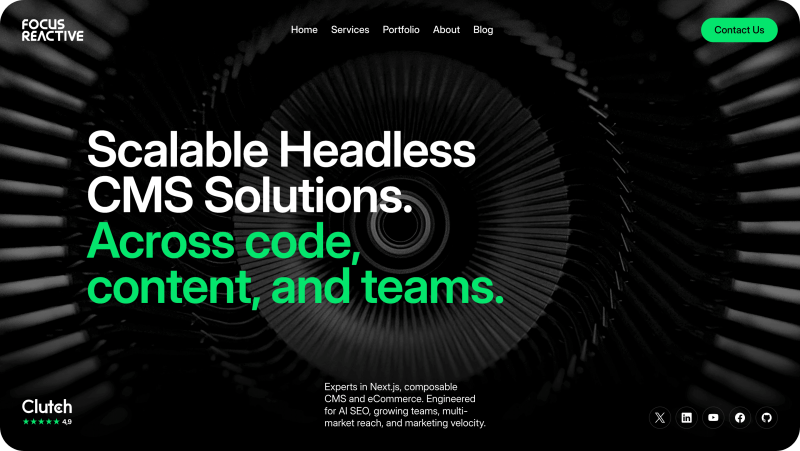
HQ: London · Amsterdam · Warsaw · Remote
Time zone: CET, strong US East overlap
Founded: 2019 · Team: 30+
Sanity partner status: Official
Clutch rating: 4.9 / 5 (22+ verified reviews)
Average project cost: $15K–$60K (published range $10K–$49K; enterprise above)
FocusReactive is a Sanity CMS agency known for its CMS partnerships with the leading content software like Sanity, Storyblok, Contentful, Payload. This vendor-agnostic positioning is genuinely unusual: most agencies recommend what they know, not what fits. Their open-source output (Groqd, CMS-Kit) and conference organizing activity (JSNation, React Summit) signals technical depth that few agencies can match.
Best for: Teams that have not decided on a CMS yet, B2B SaaS marketing sites, CMS-to-CMS migrations from WordPress or Contentful, multi-locale enterprise builds, AI-native content workflows
Typical stack: Sanity + Next.js, Shopify + Sanity headless commerce
Limitations: Not the right fit for legacy PHP/Drupal custom work or Fortune 100 programs where headcount volume is the primary requirement
2. Weframe Tech
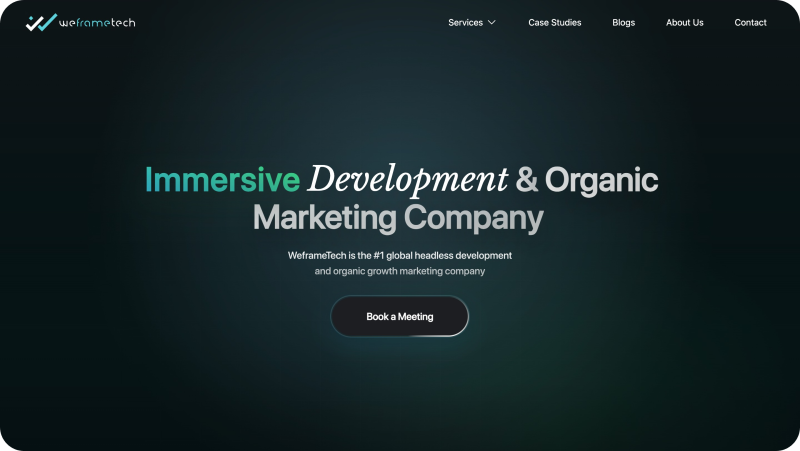
HQ: Bangalore, India (Serving Global Clients)
Time zone: IST with US, UK & APAC overlap
Founded: 2019 · Team: 40+
Sanity partner status: Certified Sanity Developers
Upwork rating: 100% Job Success Score
Average project cost: Custom engagements for startups, mid-market, and enterprise organizations
WeframeTech is the Upwork top rated Sanity CMS development agency that helps startups, scale-ups, and enterprise businesses build high-performance digital experiences using modern headless architecture. The agency specializes in combining Sanity CMS with frameworks like Astro, Next.js, and Nuxt.js to create fast, scalable websites that improve content operations, SEO, and overall business performance. Rather than focusing solely on implementation, WeframeTech emphasizes long-term growth through performance optimization, content architecture, conversion-focused development, and scalable composable solutions.
Best for: Companies planning to build headless commerce with Sanity CMS and Medusa.js or Sanity CMS with Shopify Plus, where WeframeTech has established deep implementation expertise and is one of the strongest partners for composable commerce projects. Also ideal for B2B SaaS, fintech, healthcare, AI, and enterprise marketing websites, WordPress, Webflow and Contentful migrations, multi-market and multilingual platforms, businesses prioritizing SEO, Core Web Vitals, conversion optimization, and long-term scalability.
Typical stack: Sanity CMS + Next.js, Astro, Nuxt.js, Shopify Plus, Medusa.js, Commerce Layer, Commercetools
Limitations: Best suited for organizations adopting modern headless architecture and composable web platforms rather than businesses seeking traditional monolithic CMS or legacy PHP-based development
3. DEPT®
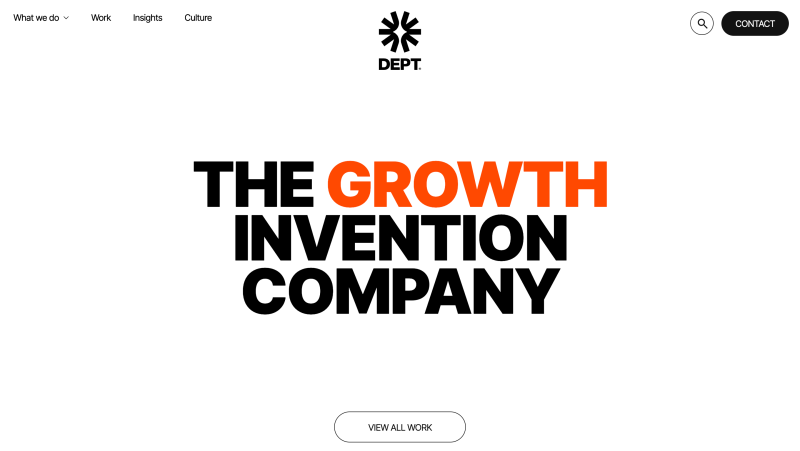
HQ: Amsterdam, NL (30+ locations, 5 continents)
Time zone: Global
Founded: 2015
Sanity partner status: Official
Clutch rating: 4.8
Average project cost: $100K–$500K+ (estimated; enterprise tier)
DEPT® is the largest verified Sanity partner by headcount and is the right choice when Sanity is one component inside a global digital transformation that also involves engineering, brand, and marketing. Clients include Google, KFC, Philips, Fidelity, Twitch, and eBay. They are B Corp certified and Climate Neutral. Sanity is one of many platforms in their stack — this is not a Sanity-specialist shop.
Best for: Global enterprises that need Sanity integrated into a multi-system digital platform with full brand, technology, and marketing support
Typical stack: Multi-platform; Sanity used as content layer within broader DXP
Limitations: Not the right fit for focused Sanity builds, SMBs, or teams that want dedicated Sanity expertise
4. RaftLabs
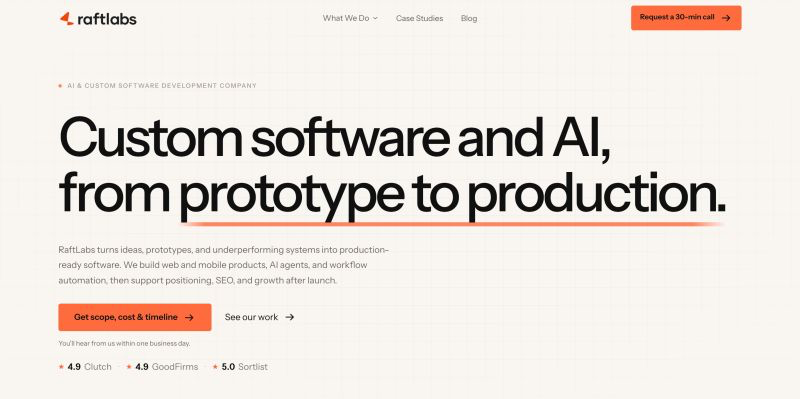
HQ: Ahmedabad, India · Dublin, Ireland
Time one: Global
Founded: 2015
Clutch rating: 4.9 / 5 (50+ verified reviews)
Average project cost: $10k-$60k
RaftLabs is an AI-first software development and growth marketing company that provides Sanity development and custom web, mobile, and SaaS development for startups and growing businesses. The company mainly serves clients across the US, UK, Canada, Europe, and GCC. Its headless CMS practice focuses on Sanity, with experience across content modeling, CMS implementation, API-driven delivery, and frontend integration with Next.js and React. The team also uses Sanity for its own website, where it migrated from Webflow and launched more than 3,000 programmatic SEO pages without downtime.
Best for: Startups and growing businesses that need a Sanity-powered website, headless CMS implementation, programmatic SEO, CMS migration, or custom frontend integration. Also a fit for teams that need Sanity connected to web or mobile products rather than a standalone marketing website.
Limitations: RaftLabs Company is a good choice for startups and growing businesses that need custom development alongside their CMS. Companies looking for enterprise consulting, niche CMS specialization, or simple website development projects may find that its broadercapabilities across web applications, mobile development, SaaS platforms, and AI solutions exceed the scope of their needs.
5. We Make Websites
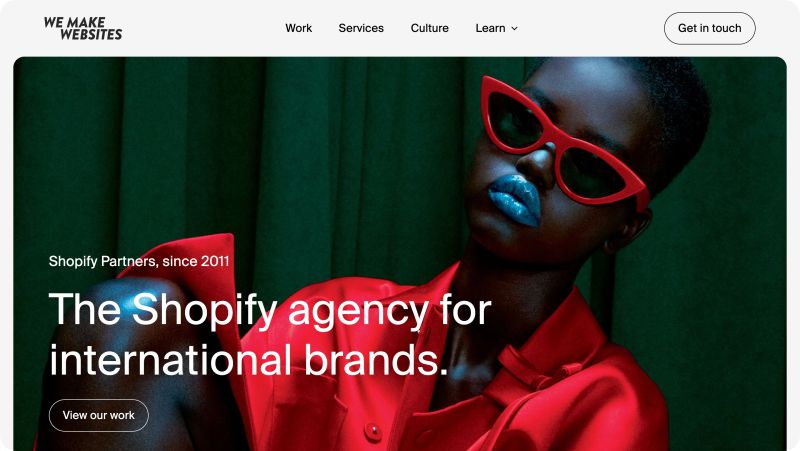
HQ: London · New York
Time zone: GMT / EST
Founded: 2008 (joined TechM XDS 2021)
Sanity partner status: Official
Clutch rating: 4.8
Average project cost: $30K–$150K (estimated; minimum from $1K stated)
One of the most experienced Shopify Plus agencies globally, with Sanity powering the content layer on headless storefronts. Their work targets premium DTC and B2B brands in fashion, beauty, and lifestyle. The TechM XDS backing provides enterprise stability. The limitation is scope: this is a Shopify-first agency — Sanity without Shopify is not their focus.
Best for: Premium Shopify Plus + Sanity headless storefronts, DTC brands with global ambitions
Limitations: Not the right choice for non-commerce Sanity projects
6. Webstacks
HQ: San Diego, CA, USA
Time zone: PST
Founded: 2020
Sanity partner status: Official
Average project cost: $40K–$120K (estimated; minimum not published)
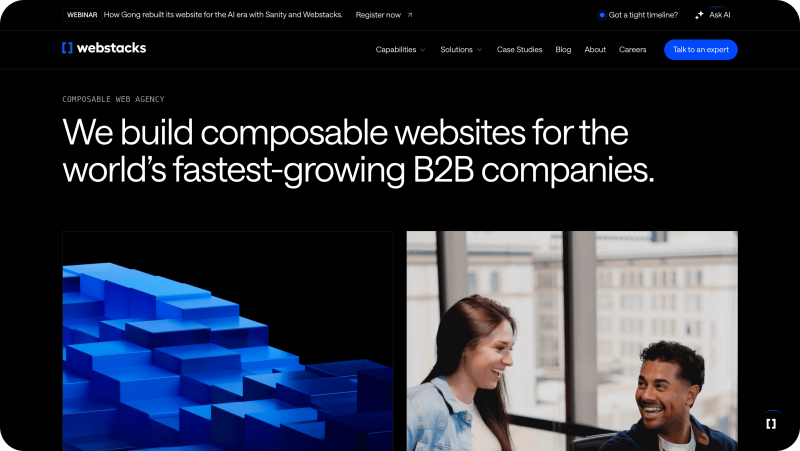
Webstacks is verticalized in one segment. They treat websites as products, not projects: ongoing iteration, design systems, and composable architecture rather than one-off builds. Notable work includes Calendly's marketing site redesign.
Best for: B2B SaaS marketing websites, FinTech, enterprise software
Limitations: Premium pricing; not a fit for e-commerce-first or small marketing sites
7. Codal
HQ: Chicago, IL · London · Bangalore
Time zone: CST + IST
Founded: 2009
Sanity partner status: Official
Clutch rating: 4.9
Average project cost: $50K–$200K (estimated)
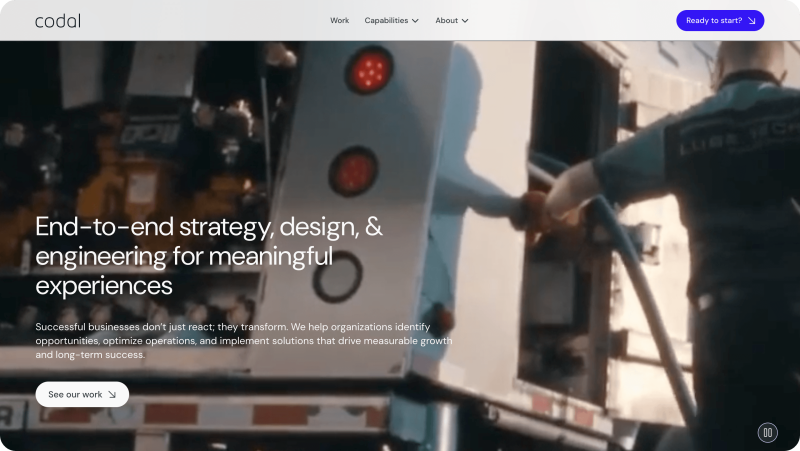
Codal is a full-service shop — design, strategy, dev, QA, and project management — which makes them a strong fit for mid-to-large enterprise projects that need a single partner to own the whole delivery. They work across retail, CPG, healthcare, and manufacturing. Sanity is one of several platforms in their portfolio.
Best for: Mid-to-large enterprise with complex omnichannel content, full-service delivery needs
Limitations: Less Sanity-specialized than boutique shops
8. Monogram
HQ: Atlanta, GA, USA
Time zone: EST
Founded: ~2017
Sanity partner status: Official
Average project cost: $15K–$150K (range published)
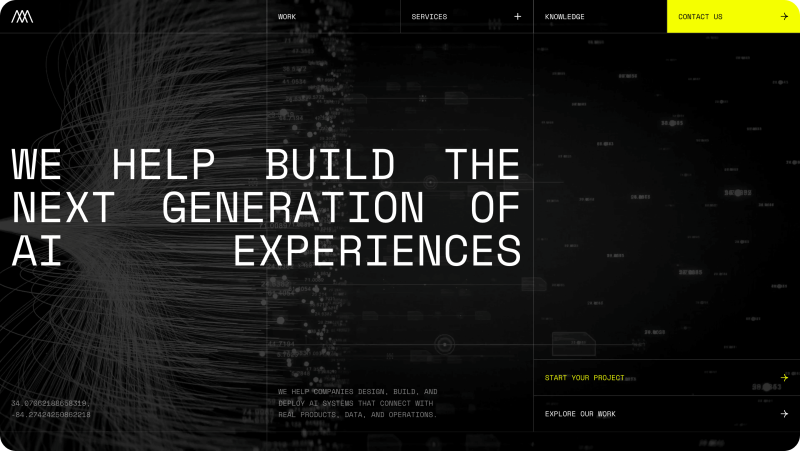
Monogram is the strongest pick for design-led composable builds where visual quality and editorial experience matter as much as the engineering. They work in Astro, Svelte, and Next.js — modern stack adoption that signals they are not defaulting to safe legacy choices. Notable for AI/dev-tools company websites and design-conscious brands.
Best for: Design-conscious brands, scaling startups, composable e-commerce, dev-tools company sites
Limitations: Smaller team limits capacity for very large enterprise programs
9. Nearform (formerly Formidable)
HQ: Seattle, WA (also Denver, Phoenix, London, Toronto)
Time zone: PST + Global
Founded: 2013
Sanity partner status: Official
Average project cost: $50K–$300K (minimum $30K published)
Nearform brings serious React engineering depth to Sanity — GROQ optimization at scale, ISR and edge rendering, React Native + Sanity systems. Their acquisition of Formidable (the open-source React specialists) gives them credibility on high-traffic performance work that most agencies cannot match. Notable past work contributed to a commerce platform with a $3.3B acquired valuation.
Best for: High-traffic performance-critical applications, enterprise engineering, React Native
Limitations: Sanity is one tool of many; editorial UX depth is secondary to engineering
10. Two Point O
HQ: Belgium · Netherlands
Time zone: CET
Sanity partner status: Official
Average project cost: $60K–$200K (minimum ~$50K published)
Two Point O is the specialist choice for mid-market and enterprise organizations building composable digital platforms with Sanity specifically. They focus on multi-brand content platforms, large-scale migrations, and custom Studio development. Their limitation is scale — boutique capacity means they are not suited for concurrent multi-team enterprise programs.
Best for: Mid-market to enterprise composable platforms, multi-brand content infrastructure, large migrations
Limitations: Not for small sites or low-budget projects
11. Represent
HQ: Oslo, Norway · London
Time zone: CET
Founded: ~2016
Sanity partner status: Official
Average project cost: ~$27K–$100K+ (300K NOK minimum published, ~$27K USD)
Represent is a senior-only boutique with Sanity-pioneer status. The Agency have been building production Sanity work since the platform's early days. Their focus is headless Shopify + Sanity for DTC and e-commerce brands in the Nordics and Silicon Valley, with a business-advisory approach that goes beyond pure development. Notable for AI-assisted content translation pipelines built inside Sanity Studio.
Best for: Ambitious DTC and e-commerce brands, Nordics and Silicon Valley, complex content models, GPT-integrated Studio workflows
Limitations: Boutique capacity; not for non-commerce enterprise content systems
12. 85SIXTY
HQ: California, USA
Time zone: PST
Years in business: 16+
Sanity partner status: Official
Average project cost: $30K–$120K (estimated)
85SIXTY is unusual in combining Sanity CMS development with CRO (conversion rate optimization) and analytics rigor. Most Sanity agencies are pure-development shops. 85SIXTY layers GA4, GTM, and Media Mix Modeling onto headless Shopify + Sanity builds, which is the right combination for scaling DTC brands focused on measurable revenue lift rather than just a fast website.
Best for: Shopify Plus brands that want dev + CRO + analytics, scaling DTCs with international ambitions
Limitations: Shopify-anchored; not a generalist Sanity shop
13. Ikius
HQ: Turku, Finland
Time zone: CET
Sanity partner status: Official
Average project cost: $15K–$60K (estimated)
Ikius is a modern web development studio specializing in Sanity headless CMS implementations. They work with businesses ranging from SMBs to enterprise clients and have particular strength in content-rich marketing sites and e-commerce integrations. Their Sanity expertise extends to both Studio customization and frontend development.
Best for: European businesses needing Sanity headless CMS implementations, content-rich marketing sites
Limitations: Smaller public profile than the larger agencies on this list
14. iO Agency
HQ: Belgium (Mechelen), NL, Sweden, Denmark, Bulgaria
Time zone: CET
Founded: 2005
Sanity partner status: Official
Clutch rating: 4.9
Average project cost: $75K–$300K+ (estimated; enterprise positioning)
iO is a full-service European agency: strategy, brand, content, marketing, and technology — where Sanity slots into a much larger digital transformation engagement. Their value is not Sanity depth but enterprise governance: compliance, multi-stakeholder delivery, and cross-country rollouts. The right choice for European enterprises and government bodies that need a single partner across disciplines.
Best for: European enterprise digital transformation, government bodies, multi-country digital platforms
Limitations: Premium pricing; Sanity is one of many CMS options in their portfolio
Sanity development company comparison table (2026)
| Web Agency | HQ | Time zone | Team size | Average project cost | Best use case | |
|---|---|---|---|---|---|---|
| 1 | FocusReactive | London / Amsterdam / Warsaw | CET | 30+ | $30k–$50k | Sanity CMS, Storyblok, Payload, enterprise project, SaaS, AI / Machine Learning, CMS migrations |
| 2 | Weframe Tech | Bangalore, India | IST, UTC | 40+ | SaaS websites & landing pages: $5-$80k; Headless commerce projects: $20-$200k+ | Ecommerce websites on Sanity CMS, Next.js, Astro |
| 3 | DEPT® | Amsterdam | Global | 4,000+ | $100K–$500k+ | Global enterprise DXP |
| 4 | RaftLabs | Dublin, Ireland | Global | 50+ | $10K - 60K+ | Sanity migrations, programmatic SEO, fixed-price B2B builds |
| 5 | We Make Websites | London / NY | GMT/EST | 50+ | $30K–$150k | Shopify Plus + Sanity headless commerce |
| 6 | Webstacks | San Diego, US | PST | ~50 | $40K–$120k | B2B SaaS marketing sites |
| 7 | Codal | Chicago, US | CST+IST | 150+ | $50K–$200k | Enterprise full-service |
| 8 | Monogram | Atlanta, US | EST | 20–30 | $15K–$150k | Design-led composable |
| 9 | Nearform | Seattle, US | Global | 100+ | $50K–$300k | High-performance React / enterprise eng |
| 10 | Two Point O | Belgium / NL | CET | 40+ | $60K–$200k | Mid-market enterprise Sanity platforms |
| 11 | Represent | Oslo / London | CET | Boutique | $27K–$100k+ | DTC e-commerce, Nordics / SV |
| 12 | 85SIXTY | California, US | PST | Midsize | $30K–$120k | Shopify + CRO + analytics |
| 13 | Ikius | Turku, Finland | CET | Small | $20K–$60k | Sanity headless, EU market |
| 14 | iO Agency | Belgium / NL | CET | 1,000+ | $10K - 60K+ $75K–$300k | Sanity migrations, programmatic SEO, fixed-price B2B builds |
Sanity CMS Agency Main Caveats
A few honest caveats about the general approach to finding dedicated Sanity developers:
Time zones are underrated. A senior Croatian, Belarusian, or Polish, or any remote European team you can talk to live for 4 hours a day will out-deliver a US Sanity developer that bills 3× and replies on Slack within a business day. Pick for overlap and convenience, not just postcode.
Rankings move fast. Clutch ratings shift, agencies grow or shrink, partnerships start and end. Verify every data point before hiring — especially partner status on sanity.io/agency-partners.
Specialization beats reputation for Sanity work. Any development company can generate hundreds of positive Google reviews or whatever, and these public directories should be checked twice before contacting for a Sanity project. The Sanity ecosystem (GROQ, Studio, schema patterns) and official partnership with engineering agencies around the world is deep enough that depth matters more than brand.
Sanity developer rates (2026)
Whether you are hiring a Sanity development company or an individual Sanity CMS developer, these are the current market rates:
| Engagement type | Rate range | Notes |
|---|---|---|
| Freelance Sanity developer (Upwork | $51-$75/hr | Senior developers command $80–$120/hr |
Boutique Sanity agency (EU/UK) | $80-$130/hr | CET timezone, 4hr+ US overlap |
Mid-size Sanity agency (US) | $120-$200/hr | Higher for senior-only teams |
Enterprise agency (US) | $150-$250/hr | Full-service with PM and design |
Cost-effective agency (India/EE) | $35-$70/hr | Sanity-specific expertise varies |
Monthly retainer (boutique) | $8K-$15K/month | Ongoing iteration model |
Fixed project (marketing site) | $15K-$50K | Simple schema, standard frontend |
Fixed project (enterprise migration) | $50K-$200K+ | Complex schema, content transformation |
Which Sanity CMS agency should you hire?
Use this decision logic before booking any intro calls:
Sanity-first, complex schema architecture → FocusReactive
Headless Shopify + Sanity, premium fashion or luxury brand → Commerce-UI or We Make Websites
Headless Shopify + Sanity, Nordic or EU DTC brand → Represent
Headless Shopify + Sanity + CRO/analytics → 85SIXTY
Enterprise content platform, European full-service → Raftlabs or DEPT®
B2B SaaS marketing site, US-based preference → Webstacks or Monogram (design-led)
Multi-brand, multi-locale content infrastructure → Two Point O
Design-led, editorial UX focus → Monogram
Budget-constrained, need genuine Sanity expertise → Ikius
Enterprise content platform, US full-service → Codal or Nearform
B2B SaaS marketing site, EU preference or async-friendly → FocusReactive
How to run the Sanity agency selection process
Step 1: Write a one-page brief first. What you are building. Your current CMS. Content volume and type. Number of editors. Target launch date. Integrations (CRM, commerce, search). Budget range. Without this, every agency conversation will be exploratory rather than evaluative.
Step 2: Shortlist three agencies from this list. Use the decision tree above. Do not contact more than four — you will waste your own time on calls that reveal nothing differential.
Step 3: Send the same five questions to all three:
- Show me a Sanity schema.ts from a project similar to mine.
- How do you handle live preview, scheduled publishing, and role-based access?
- What is your migration plan for content from [current CMS]?
- What does your warranty cover and for how long after launch?
- Who specifically works on this project — names, seniority, and hourly rate?
Step 4: Run a paid discovery before signing a full build. $2K–$5K for a one-week discovery produces a content model sketch, a migration risk register, and a detailed scope. It also tells you whether the team can think — and gives you a deliverable even if you walk away.
Step 5: Reference-check by phone, not email. Ask former clients: "What would you do differently if you hired them again?" The answer is always more useful than "what did they do well."
Step 6: Sign with fixed milestones and a kill clause. Time-and-materials with no milestones is where projects bleed indefinitely. Fixed milestones with an exit option at each one protect both sides.
Conclusion: should you hire a freelance Sanity developer or an agency?
This is the practical question that comes after every list, and it has a direct answer.
Hire a freelance Sanity developer when: you have a small, well-defined scope (a schema audit, a custom Studio input, a GROQ optimization pass), a limited budget under $10K, and an in-house developer who can own the codebase long-term.
Hire a Sanity development agency when: the project involves content migration, multi-locale rollouts, custom editorial workflows, a headless commerce storefront, or any situation where the CMS needs to outlast the original developer. Sanity CMS agencies bring team coverage, documented schema decisions, post-launch warranties, and the ability to scale without rehiring. Their higher day rate typically produces a lower total cost of ownership over 18-24 months because they reduce the rebuild cycles that under-specified freelance work creates.
Development agencies tend to win on total cost of ownership above roughly $20,000 in project scope, particularly when the engagement involves ongoing editorial complexity rather than a single contained deliverable. Below that threshold, a freelance Sanity developer with verified partner certification is often the most economical choice.
One practical test to find a professional Sanity Agency: ask any candidate (a freelancer or an agency) to show you a schema.ts file from a production project and explain three design decisions they made in it. A freelancer who can answer that question fluently is worth more than an agency that cannot. The credential matters less than the reasoning. The question is which one matches your project type, budget, and timezone.
Hire Sanity Developers Wisely
Choosing the right Sanity CMS agency or development team comes down to real expertise, proven experience, and actual websites launched. Maintainability matters more than most teams will tell you: you won't always have developers and marketing aligned post-launch, so initial support is critical to help your content team set up the right processes from day one.
SEO capabilities are a given, but in 2025-2026, Generative Engine Optimization (GEO) has become a meaningful differentiator. You need a team that understand how to structure content for AI-driven search, not just traditional SEO ranking signals. Daily progress updates keep you in control and eliminate surprises, and flexible revisions ensure the final build actually matches your requirements.
Most importantly, work with a dedicated team and official Sanity CMS implementor that has a clear project coordinator, not a fragmented setup where accountability gets lost. The difference between a smooth launch and a painful one usually comes down to that single point of contact.
Frequently asked questions about Sanity CMS
Is Sanity CMS free?
Yes, the free tier includes Sanity Studio, the hosted Content Lake APIs, and real-time collaborative editing — enough for solo developers, small sites, and prototypes. Paid plans (Growth, Enterprise) add higher API quotas, SSO, advanced roles, audit logs, and dedicated support. Free to start, paid as you scale.What is GROQ?
GROQ (Graph-Relational Object Queries) is Sanity's native query language. It is designed specifically for querying document graphs with deeply nested references — more expressive than GraphQL for content-heavy applications. GROQ fluency is the clearest technical differentiator between Sanity specialists and general headless CMS developers.What is a Sanity Studio?
Sanity Studio is an open-source, React-based editing environment that runs in the browser. Unlike fixed-UI CMSes, every aspect of Studio can be customized — field inputs, navigation structure, live preview, AI integrations, validation rules, and workflows. Studios are typically deployed to a subdomain (studio.yourdomain.com) and built as part of the project codebase.What is the Sanity Content Lake?
The Content Lake is Sanity's hosted data layer, the cloud database that stores all your content. It is queried via GROQ or GraphQL from any frontend. Unlike self-hosted CMSes, you do not manage the database. Sanity manages replication, backups, and CDN delivery. The Live CDN ensures real-time content delivery globally.How long does a Sanity implementation take?
A standard marketing site with a well-defined schema takes 6-10 weeks from kick-off to launch. A headless e-commerce storefront with Shopify integration typically takes 10–16 weeks. An enterprise migration from Drupal or AEM with content transformation takes 16–24 weeks or more depending on content volume and integration complexity.
Sources: sanity.io/agency-partners (October, 2026), clutch.co/web-developers/sanity (June 2026), agency-published case studies and pricing pages, Sanity product documentation, Crunchbase, TechCrunch, Agency websites, and Google search. Cost figures marked "estimated" are based on comparable project scope and market rate data — verify directly with each agency.





















Comments